
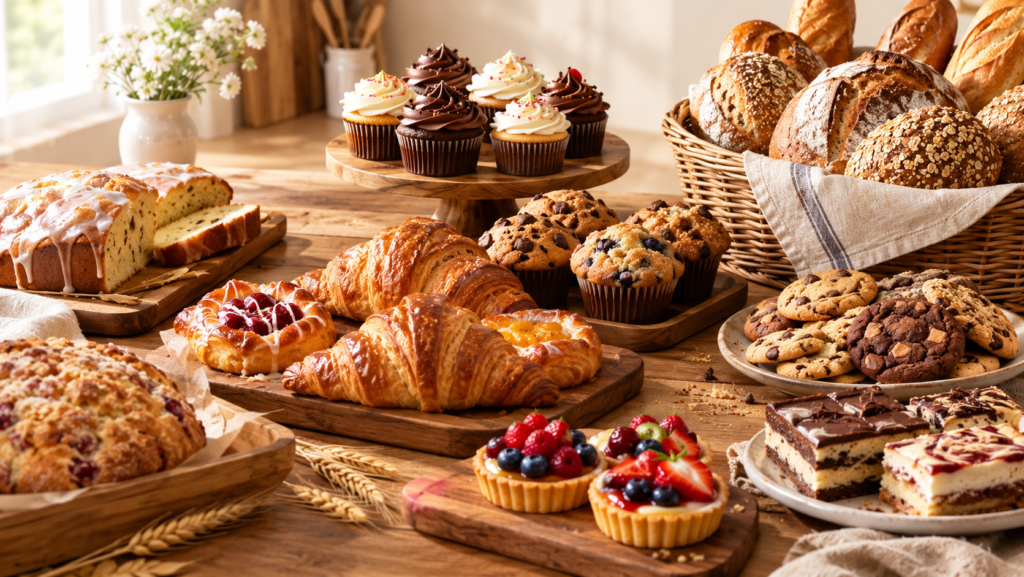
Fresh baked goods have a special appeal that packaged products often cannot replicate. The aroma of bread coming out of the oven, the crisp edge of a freshly baked pastry, or the soft texture of a warm cake can turn an ordinary meal into something memorable. Whether you are looking for breakfast bread, a celebratory cake, flaky pastries, cookies, muffins, or savory baked treats, freshness plays a major role in flavor, texture, and overall quality.
But what exactly makes a baked product “fresh”? How can you tell whether bread or pastries were baked recently? And what should you consider when choosing a bakery for fresh baked goods?
This guide explores everything you need to know about fresh baked goods, from the baking process and signs of freshness to storage, popular varieties, and tips for buying quality products.
What Are Fresh Baked Goods?
Fresh baked goods are products that have recently been prepared and baked, usually with ingredients such as flour, butter, eggs, milk, sugar, yeast, fruits, nuts, chocolate, spices, or other flavoring ingredients.
Unlike highly processed products designed for long shelf life, many fresh bakery items are made to be enjoyed within a relatively short period. Their appeal comes from characteristics such as aroma, softness, crispness, moisture, and flavor.
Common examples include:
- Fresh bread and rolls
- Croissants and Danish pastries
- Cakes and cupcakes
- Cookies and biscuits
- Muffins
- Buns and sweet rolls
- Pies and tarts
- Brownies
- Sourdough loaves
- Focaccia
- Savory pastries
- Stuffed breads
- Seasonal baked specialties
Freshness can mean different things depending on the product. A crusty sourdough loaf may be at its best several hours after baking, while a cream-filled pastry may be best consumed much sooner.
Why Freshness Matters in Baked Goods
Freshness affects more than just taste. It can influence the texture, aroma, appearance, and eating experience of a bakery product.
- Better Flavor
Freshly baked products often have a stronger and more pleasant aroma. Bread can develop a fragrant crust, while pastries can have noticeable buttery and toasted flavors.
As baked goods sit for longer periods, their flavors can gradually change. Exposure to air can also affect delicate ingredients and toppings.
- Improved Texture
Texture is one of the clearest differences between fresh and older bakery products.
Fresh bread may have a crisp crust and soft interior. A freshly baked croissant can have a delicate, flaky structure. Cookies may be crisp around the edges while remaining tender in the center.
Over time, moisture moves within baked products, which can make some items softer or drier than intended.
- Better Aroma
The smell of freshly baked bread, cinnamon rolls, or pastries is one of the reasons people enjoy visiting bakeries. Baking releases aromatic compounds that contribute significantly to the overall sensory experience.
A strong, pleasant bakery aroma can be an encouraging sign that products are being baked regularly.
- More Enjoyable Eating Experience
Freshness brings together aroma, flavor, and texture. Even a simple loaf of bread can feel considerably more enjoyable when it has been baked recently and served at the right stage.
How Fresh Baked Goods Are Made
The exact process varies by product, but most bakery items follow a series of carefully controlled steps.
Ingredient Selection
Good baking begins with appropriate ingredients. Flour, butter, eggs, dairy products, yeast, sugar, fruits, chocolate, spices, and other ingredients each contribute to the final result.
Ingredient quality does not necessarily mean using the most expensive ingredients. Rather, experienced bakers understand how ingredients behave and how their quality affects the final product.
Mixing and Preparation
Ingredients are measured and combined according to the recipe. Bread dough, for example, requires careful mixing and kneading to develop its structure.
Pastry dough requires a different approach. Excessive handling can affect the delicate texture that gives pastries their characteristic flakiness.
Fermentation and Proofing
Yeast-based products often require fermentation or proofing before baking. During this stage, yeast produces carbon dioxide, causing the dough to expand.
Temperature and time are important. Under-proofed dough may be dense, while over-proofed dough can lose structure.
Baking
The baking stage transforms prepared dough or batter into the finished product.
Oven temperature, baking time, humidity, pan type, and product size can all influence the result. A few minutes can make a significant difference in the color and texture of certain products.
Cooling and Finishing
Some products are ready to eat shortly after cooling, while others require additional finishing.
Cakes may be layered and decorated. Pastries might receive glazes or fillings. Bread may need sufficient cooling before slicing so its internal structure can stabilize.
Popular Types of Fresh Baked Goods
The world of bakery products is incredibly diverse. Different cultures and regions have developed their own distinctive breads, pastries, cakes, and sweet treats.
Fresh Bread
Bread remains one of the most popular fresh bakery products.
Options include:
- White bread
- Whole wheat bread
- Multigrain bread
- Sourdough
- Rye bread
- Brioche
- Milk bread
- Baguettes
- Focaccia
- Dinner rolls
Fresh bread can be used for sandwiches, toast, breakfast, snacks, or served alongside soups and meals.
Croissants and Pastries
Croissants are known for their layered, flaky texture. Properly made croissants generally have a crisp exterior with delicate layers inside.
Other popular pastries include Danish pastries, puff pastries, turnovers, cinnamon rolls, and fruit-filled pastries.
Because many pastries depend heavily on their texture, freshness is particularly important.
Cakes
Fresh cakes are popular for birthdays, weddings, anniversaries, festivals, and everyday celebrations.
Common varieties include:
- Chocolate cake
- Vanilla cake
- Red velvet cake
- Carrot cake
- Fruit cake
- Cheesecake
- Coffee cake
- Sponge cake
- Layer cakes
- Mousse cakes
A fresh cake should generally have an appealing aroma, suitable moisture, and a texture appropriate to its style.
Cookies
Cookies are available in countless varieties, from classic chocolate chip cookies to shortbread, oatmeal cookies, nut-based cookies, and filled varieties.
Fresh cookies can vary considerably in texture. Some are intentionally crisp, while others are designed to remain soft and chewy.
Muffins
Muffins are convenient breakfast and snack options. Popular flavors include blueberry, chocolate, banana, lemon, apple, and bran.
A good muffin should have a pleasant crumb and flavor without feeling excessively dry or dense.
How to Tell If Baked Goods Are Fresh
You do not always need specialized knowledge to identify fresh bakery products. Several simple clues can help.
Look at the Appearance
Fresh baked goods should generally have an appropriate color for their type.
Bread may have a golden-brown crust. Pastries often have a lightly browned exterior. Cookies should have a color consistent with their ingredients and baking style.
However, appearance alone is not enough. Some products are intentionally pale, while others are deliberately baked to a darker finish.
Check the Texture
Texture is one of the most useful indicators.
Fresh bread should not feel unusually hard or dry unless it is a product designed to be crisp. Fresh pastries should have the texture expected for their particular style.
If a product feels excessively dry, tough, stale, or unusually soft, it may not be at its best.
Notice the Aroma
Freshly baked goods typically have a noticeable aroma. Bread may smell toasted and wheaty, while pastries can have buttery, sweet, or spiced notes.
An unusual or unpleasant odor is a reason to avoid the product.
Consider the Crust
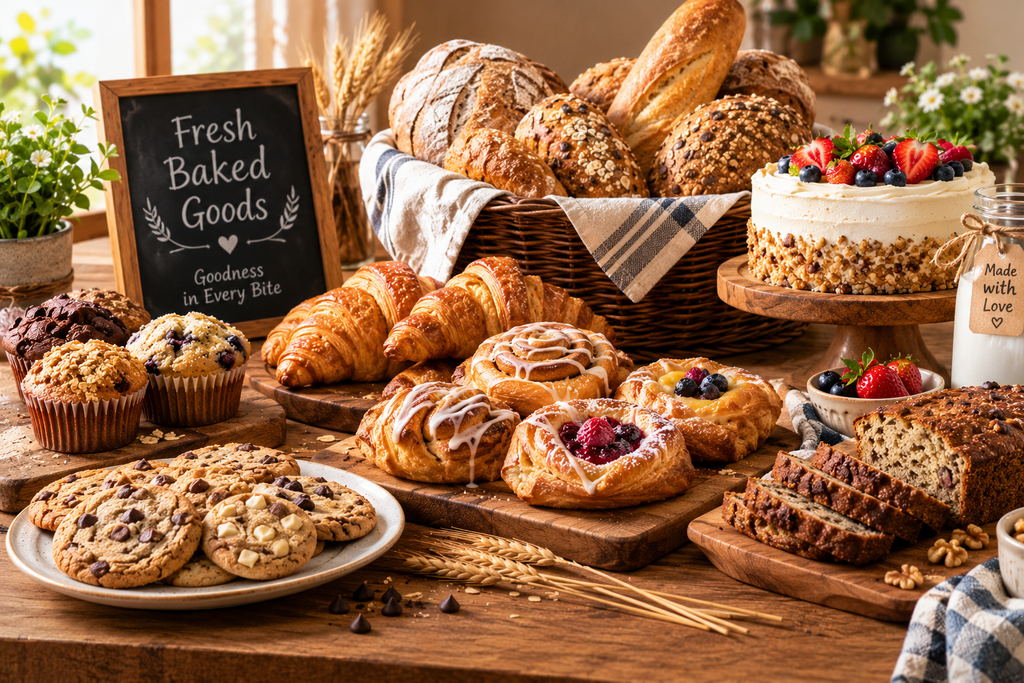
For crusty breads, the crust can provide useful information. A good loaf may have a firm exterior with an appropriately soft interior.
The exact crust depends on the bread style, though. Soft sandwich bread should not be judged by the same standards as an artisan sourdough loaf.
Ask When It Was Baked
One of the simplest approaches is also one of the most effective: ask the bakery.
A reputable bakery should be able to explain its baking schedule and provide information about when particular products are usually made.
Freshly Baked vs. Packaged Baked Goods
Packaged baked goods can be convenient, affordable, and suitable for many situations. They are often produced with longer storage and transportation in mind.
Fresh bakery products, on the other hand, are generally intended to be consumed sooner.
The biggest differences may include:
Feature| Fresh Baked Goods| Packaged Products
Aroma| Usually stronger| Often milder
Texture| Often more distinctive| Designed for consistency
Shelf life| Generally shorter| Generally longer
Availability| Depends on bakery schedule| Often widely available
Customization| Often possible| Usually limited
Preparation| Often baked in smaller batches| Frequently produced at larger scale
Neither category is automatically better for every situation. The right choice depends on what you need.
If you want a loaf for immediate consumption, fresh bakery bread may be ideal. If you need a product that will remain convenient for several days, packaged options may be more practical.
Choosing a Bakery for Fresh Baked Goods
Not all bakeries operate in the same way. If freshness matters to you, consider several factors before choosing where to buy.
Ask About Baking Schedules
Find out whether products are baked throughout the day or at specific times.
A bakery that produces several batches can provide customers with opportunities to purchase products soon after baking.
Look for Product Turnover
Busy bakeries often have faster product turnover, although popularity alone does not guarantee quality.
Observe whether products appear fresh and whether customers are regularly purchasing them.
Consider Ingredient Transparency
A good bakery should be able to provide basic information about its products, including common ingredients and potential allergens.
This is especially important for customers with food allergies or dietary restrictions.
Examine Cleanliness
Clean preparation and display areas are important when choosing any food business.
Look for clean counters, appropriate food handling, organized displays, and hygienic practices.
Check Reviews Carefully
Customer reviews can help identify consistent patterns in quality, service, freshness, and reliability.
Rather than focusing on one extremely positive or negative review, look for repeated comments across multiple customers.
How to Store Fresh Baked Goods at Home
Proper storage can help maintain the quality of bakery products after purchase.
Bread
Many types of bread are best kept at room temperature in an appropriate bread bag or container for short-term storage.
Refrigeration can cause some breads to lose their desirable texture more quickly. If you will not eat the bread soon, freezing may be a better option.
Pastries
Pastries often have different storage requirements depending on their fillings.
Dry pastries may be suitable for short-term room-temperature storage, while products containing cream, custard, or other perishable fillings generally require refrigeration according to food-safety guidance.
Cakes
Cake storage depends on the ingredients and frosting.
A simple unfrosted cake may be suitable at room temperature for a limited time, while cakes containing cream, custard, fresh fruit, or certain frostings may require refrigeration.
Always follow the bakery’s storage instructions when available.
Cookies
Cookies should generally be stored in an airtight container once sufficiently cooled.
Separating soft and crisp cookies can help preserve their intended textures.
Can Fresh Baked Goods Be Frozen?
Yes. Many bakery products can be frozen successfully when properly packaged.
Bread freezes particularly well. Cakes, muffins, cookies, and some pastries can also be frozen, although the result depends on ingredients and decoration.
For best results:
- Allow the product to cool completely.
- Wrap it securely.
- Use an airtight freezer-safe container or bag.
- Label it with the date.
- Thaw it appropriately before serving.
Products with delicate cream toppings or fillings may not freeze as successfully as simple breads or muffins.
Fresh Baked Goods for Special Occasions
Fresh bakery products are closely associated with celebrations.
Birthday cakes, cupcakes, pastries, cookies, and customized desserts can make an event feel more personal.
When ordering for a special occasion, consider:
- Number of guests
- Dietary requirements
- Flavor preferences
- Required serving size
- Decoration
- Pickup or delivery timing
- Storage requirements
- Whether the product is best served chilled or at room temperature
It is wise to order custom products in advance, particularly during holidays and busy celebration seasons.
Fresh Baked Goods for Breakfast
Fresh bakery products can make breakfast simple and satisfying.
Bread can be paired with eggs, vegetables, spreads, cheese, or fruit. Muffins and pastries can work well for quick breakfasts, while fresh rolls or sweet breads can be served as part of a larger meal.
For a more balanced breakfast, consider combining bakery products with protein-rich foods, fruit, vegetables, or dairy products rather than relying exclusively on sweet baked goods.
Fresh Baked Goods for Gifting
A box of fresh baked goods can also make a thoughtful gift.
Popular choices include:
- Assorted cookies
- Brownies
- Mini cakes
- Muffins
- Pastry boxes
- Artisan bread
- Festive baked treats
- Customized cupcakes
Presentation matters, but freshness and appropriate storage during transportation are equally important.
For gifts containing perishable fillings or toppings, make sure the recipient understands any storage requirements.
Seasonal Fresh Baked Goods
Many bakeries change their menus throughout the year.
Seasonal ingredients can inspire products featuring fruits, spices, nuts, chocolate, or festive flavors.
Seasonal baking can also provide opportunities to try products that may not be available year-round.
If you have a favorite bakery, checking its seasonal menu can be a good way to discover new products.
Questions to Ask Before Buying Fresh Baked Goods
If you are unsure about a product, a few questions can make your purchase easier.
Consider asking:
- When was this item baked?
- How long does it stay fresh?
- Does it need refrigeration?
- What are the main ingredients?
- Does it contain common allergens?
- How should it be stored?
- Is it suitable for freezing?
- Is this product available in different sizes?
- Can the bakery customize it?
- When should I place an order for a special occasion?
A bakery that communicates clearly about its products can make the buying experience much easier.
Why Local Bakeries Can Be a Good Choice
Local bakeries often provide products that are made in smaller batches and sold relatively soon after production.
They may also offer greater customization than mass-produced alternatives, including different flavors, sizes, fillings, and decorations.
Buying locally can also give customers an opportunity to build a relationship with the people who make their food. Over time, you can learn which products are baked at particular times and which specialties are most popular.
Making Fresh Baked Goods Part of Everyday Life
Fresh bakery products do not have to be reserved for birthdays or special occasions.
A fresh loaf can improve a simple breakfast. A warm pastry can make a weekend morning more enjoyable. Fresh rolls can complement dinner, while cookies or muffins can be shared with family and friends.
The key is choosing products that suit the occasion and consuming them while they are at their best.
Final Thoughts
Fresh baked goods offer something that goes beyond basic convenience. Their aroma, texture, flavor, and variety make them a popular part of everyday meals and special occasions alike.
From crusty bread and flaky pastries to cakes, cookies, muffins, and seasonal specialties, there is a wide range of products to explore. Understanding how freshness affects different baked goods can help you make better purchasing and storage decisions.
When choosing a bakery, pay attention to baking schedules, product quality, cleanliness, ingredient information, customer feedback, and storage guidance. For special orders, plan ahead and communicate your requirements clearly.
Most importantly, enjoy fresh baked goods at the stage when their flavor and texture are at their best. Whether it is a loaf of bread purchased for breakfast, a pastry enjoyed with tea, or a beautifully decorated cake shared at a celebration, freshly baked food can turn a simple moment into something worth remembering.